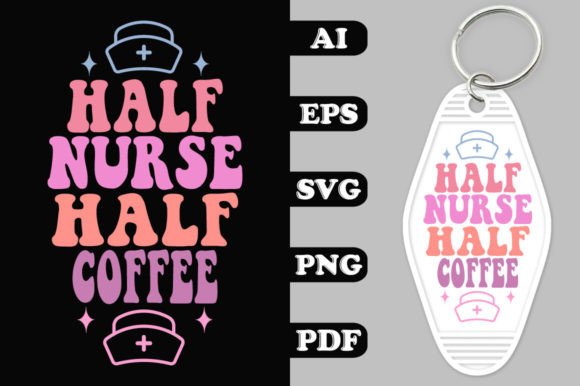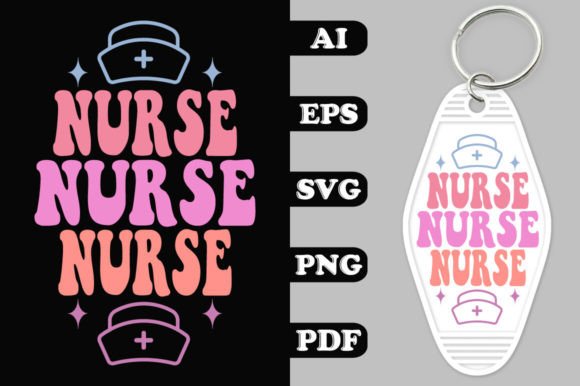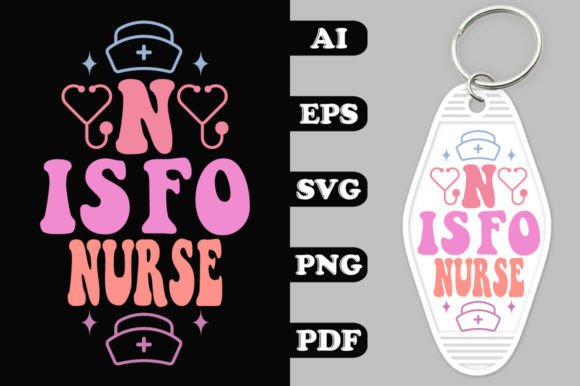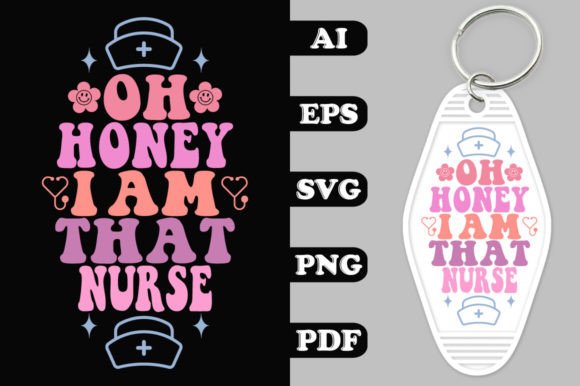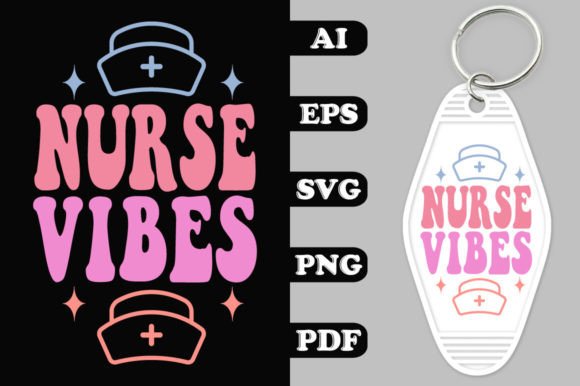
Nurse Vibes Groovy Key Chain SVG Review
As a designer who spends half my life staring at stitch previews and the other half troubleshooting thread breaks, I have learned to be skeptical of trendy digital assets. We see thousands of files pass through our folders, but few actually translate well from screen to fabric. When I first loaded the Nurse Vibes Groovy Key Chain SVG into my digitizing software, I was looking for more than just a cute graphic. I wanted to know if this design could hold up under the needle, survive a wash cycle, and ultimately, sell in a crowded marketplace.
The initial impression is distinct. This isn’t your standard clinical medical iconography. The retro aesthetic, with its warped typography and playful layout, taps directly into the current demand for nostalgic, sarcastic, and personality-driven crafts. For embroidery designers and small business owners, this presents an interesting challenge. How do you take a design labeled as a keychain SVG and adapt it for larger surfaces without losing its charm? That is exactly what I set out to determine.
From Digital File to Stitched Reality
The term "SVG" often implies vector graphics meant for cutting machines or sublimation, but in the world of Crafts and Graphics, lines blur. If you are using this as a reference for machine embroidery, the visual weight of the design matters immensely. The groovy, rounded lettering suggests a need for careful stitch management. Thin, spindly fonts can disappear on textured fabrics, while overly dense fills can cause puckering.
I imagined this design applied to a canvas tote bag, a popular item for nursing students and healthcare workers. The bold, retro vibe fits perfectly here. However, translating a keychain-sized concept to a tote requires scaling. When you enlarge a design intended for a small hoop, you must check the stitch density. If the original file was optimized for a 4x4 inch hoop, blowing it up to 8x8 inches for a sweatshirt might reveal gaps in the fill stitch or jagged edges in the satin stitch borders. My advice is to always inspect the pathing. Does the design rely on complex running stitches that might snag, or does it use solid fill areas that provide good coverage?
Real-World Application Scenarios
Let’s talk about where this design actually shines. I tested the concept mentally against several common products for Etsy sellers and craft fair vendors. First, consider the embroidered patch. A circular or oval patch with this "Nurse Vibes" text would make an excellent add-on product. Patches allow you to control the stabilizer and fabric type strictly, ensuring the groovy curves remain smooth. Using a cut-away stabilizer here would prevent distortion, which is crucial for the rounded, retro font style.
Another strong candidate is custom apparel, specifically sweatshirts. Healthcare workers love comfortable, personalized gear. Embroidering this design on the left chest of a fleece jacket creates a subtle yet professional statement. The sarcasm inherent in the "groovy" aesthetic pairs well with the high-stress environment of hospitals, offering a moment of levity. However, you must consider the fabric texture. Fleece has a pile that can swallow small details. If the design includes tiny elements or thin outlines, they may get lost. In such cases, switching to a thicker thread or adjusting the stitch width can help maintain visibility.
For baby items or nursery decor, the approach changes. While the theme is adult-oriented, the retro style is currently trending in modern nurseries. If you were to adapt this for a pillow cover or a blanket, ensure the thread colors are soft and the stitching is secure. Babies pull at things, so loose threads from a poorly digitized fill area are a safety hazard. Always double-check the trim points and jump stitches in your embroidery file before handing over a finished product.
Navigating Technical Challenges
There are specific scenarios where you should proceed with caution. Curved surfaces, like caps, are tricky for wide, horizontal designs. The "Nurse Vibes Groovy Key Chain SVG" likely features a horizontal layout. On a structured cap, this might wrap around the curve awkwardly, causing the text to distort visually even if the stitching is perfect. It is better suited for flat panels or the back of a snapback where the surface is broader.
Dark fabrics present another hurdle. If you are stitching this onto navy scrubs or black tote bags, thread color contrast is vital. A light pastel thread might not pop enough against a dark background, especially if the design relies on subtle shading. I recommend testing the design in black and white mockups first. If the design loses its definition in grayscale, it will likely struggle on low-contrast fabrics. Additionally, check if the design includes underlay stitches. Proper underlay anchors the top stitches and prevents the fabric from showing through, which is essential for maintaining a professional look on dark materials.
Commercial Viability and Brand Consistency
For commercial embroidery projects, consistency is key. If you are building a brand around retro medical humor, this design fits the niche perfectly. It enhances buyer engagement because it feels personal and timely. However, you must verify the licensing. Just because a file is labeled as an SVG or a digital embroidery file does not automatically grant you commercial rights. Check the terms provided by the creator. Can you sell finished items? Can you use it in printable mockups for your online store? Clarifying this protects your small shop product line from legal issues.
Furthermore, consider the perceived value. A well-executed embroidery project commands a higher price than a printed one. The texture of the thread adds tactile appeal. When customers see the raised satin stitch of the groovy letters, they perceive quality. This builds trust and encourages repeat business. Use high-quality thread colors that resist fading, especially for items like aprons or kitchen towels that undergo frequent washing.
Practical Designer Notes
Before you commit to a large production run, follow these steps:
- Test on scrap fabric: Never stitch directly on your final garment. Use the same material and stabilizer combination you plan to use for the finished product.
- Check hoop size compatibility: Ensure the design fits within your machine’s maximum hoop size without requiring excessive re-hooping, which can lead to misalignment.
- Review stitch density: If the design feels too stiff after stitching, reduce the density in your editing software. If it looks sparse, increase it or add a backing layer.
- Inspect small details: Zoom in on the digital preview. Look for overlapping stitches or unnecessary jumps that could cause thread breaks.
- Confirm licensing: Read the fine print. Ensure you are allowed to use the design for commercial sales, especially if you are an Etsy seller or run a boutique.
In conclusion, the Nurse Vibes Groovy Key Chain SVG offers a stylish, relevant aesthetic for modern crafters. With careful attention to stitch density, fabric choice, and licensing, it can be a valuable asset in your design library. Treat it not just as a graphic, but as a structural element of your handmade product. When executed with precision, it transforms from a simple digital file into a tangible piece of art that resonates with customers.